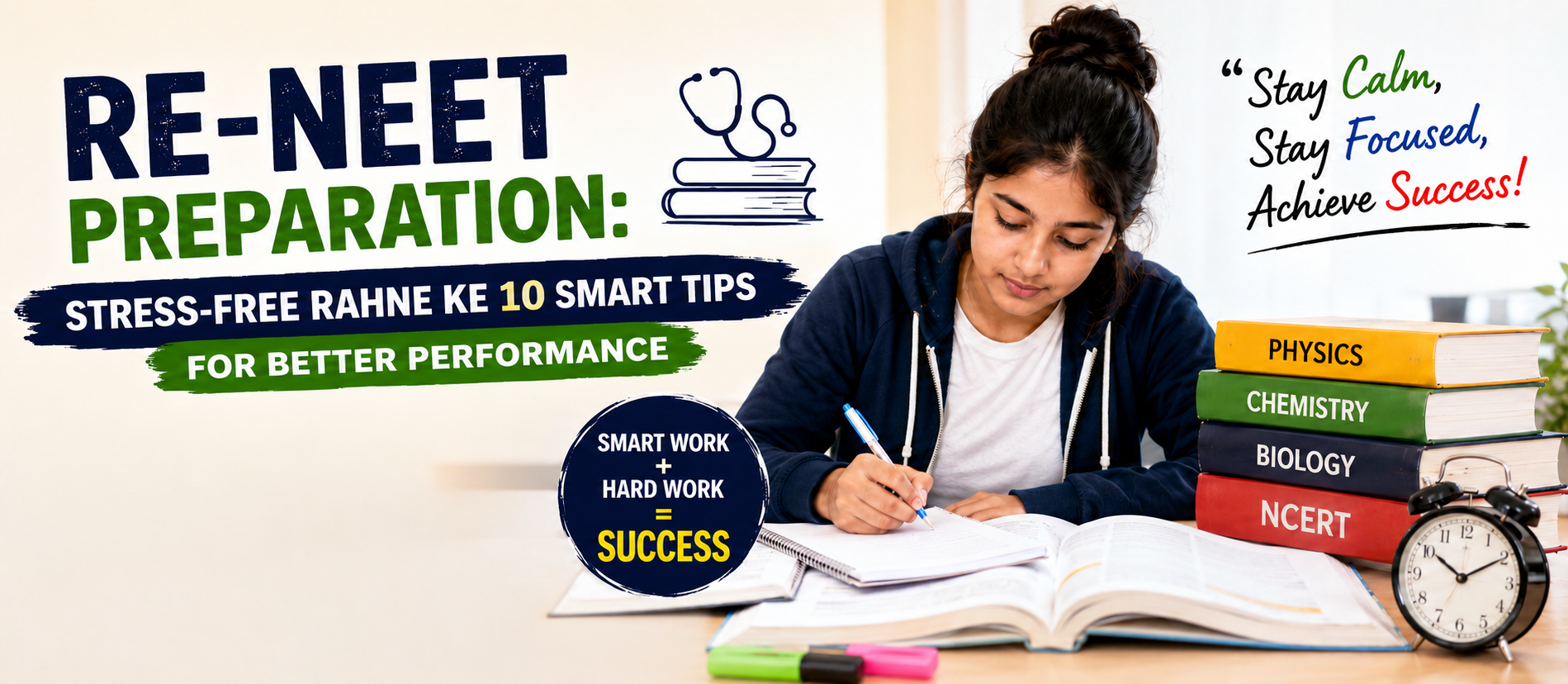
The announcement of RE-NEET has left many students feeling anxious, confused, and under pressure. A common question running through their minds is, “Can I put in all that hard work again?”
Remember, RE-NEET is not just another examination—it’s a fresh opportunity to strengthen your preparation and improve your performance.
Feeling stressed is natural, but excessive stress can negatively impact your focus and results. With the right strategy and a positive mindset, you can prepare effectively without unnecessary pressure.
Here are 10 smart tips to help you stay stress-free and perform your best in RE-NEET.
Accept the Situation and Stay Positive
The first step is to accept the situation. Spending too much time thinking about what has already happened only drains your energy.
Tell yourself:
“I have prepared before, and I can give my best once again.”
A positive attitude boosts confidence and helps reduce stress.
2. Create a Realistic Study Plan
Studying without proper planning often leads to unnecessary stress.
Design a practical timetable that includes:
- Daily study goals
- Revision sessions
- Mock tests
- Regular breaks
Instead of setting unrealistic targets, focus on achievable daily objectives.
3. Focus on NCERT and Important Topics
Avoid the mistake of collecting new study materials at the last moment.
Prioritize:
- Line-by-line NCERT revision
- Important formulas
- Diagrams
- Previous years’ questions
- High-weightage chapters
Remember, quality of study matters more than quantity.
4. Practice Mock Tests Without Pressure
Mock tests are not just about scoring marks; they are tools for improvement.
After every test:
- Analyze your mistakes
- Identify weak areas
- Improve time management
Don’t let a low score discourage you. Treat it as a learning opportunity.
5. Avoid Comparing Yourself with Others
Every student has a unique learning pace and preparation journey.
Stay away from unnecessary comparisons and social media discussions. Focus on your own progress.
Comparison lowers confidence, while self-improvement leads to success.
6. Take Care of Your Physical Health
A healthy body supports a healthy mind.
Include the following in your daily routine:
- 7–8 hours of sleep
- Nutritious meals
- Adequate hydration
- Light exercise
- Morning walks or stretching
Physical well-being directly impacts productivity and concentration.
7. Practice Meditation and Deep Breathing
Spending just 10–15 minutes a day on meditation or deep breathing exercises can:
- Reduce stress
- Improve concentration
- Control anxiety
- Enhance memory retention
Mental fitness is just as important as academic preparation.
8. Limit Social Media Usage
Constant notifications and exam-related rumours can increase stress levels.
Follow these simple habits:
- Keep your phone on silent during study hours.
- Set a fixed time for social media.
- Trust only authentic sources of information.
Managing digital distractions helps improve productivity.
9. Stay Connected with Family and Mentors
Sharing your thoughts and feelings is a sign of strength, not weakness.
Parents, teachers, and mentors can provide:
- Emotional support
- Motivation
- Practical guidance
Don’t try to handle exam pressure all by yourself.
10. Believe in Yourself
Self-confidence is one of the most important factors in successful preparation.
Remind yourself every day:
- I am capable.
- I am prepared.
- I will give my best.
- Hard work never goes to waste.
Confidence combined with consistency can lead to extraordinary results.
Frequently Asked Questions (FAQs)
You can reduce stress by following a realistic study plan, taking regular breaks, practicing meditation, exercising daily, and maintaining a positive mindset. Avoid overthinking and focus on consistent preparation.
Yes, feeling anxious before an important exam is completely normal. The key is to manage anxiety through proper planning, healthy habits, and self-confidence rather than letting it affect your preparation.
No. It is better to focus on NCERT textbooks, previous years' questions, mock tests, and your existing study materials instead of collecting new resources at the last minute.
There is no fixed number of hours. Productive and focused study sessions with regular revision are more effective than long, exhausting study hours. Aim for consistency rather than quantity.
Yes, mock tests help improve time management, identify weak areas, build confidence, and familiarize you with the exam pattern. Regular practice can significantly improve performance.
Limit social media usage, keep your phone away during study sessions, create a distraction-free study environment, and follow a structured daily routine.
Set realistic goals, celebrate small achievements, stay connected with family and mentors, maintain a positive attitude, and remind yourself that consistent hard work always pays off.